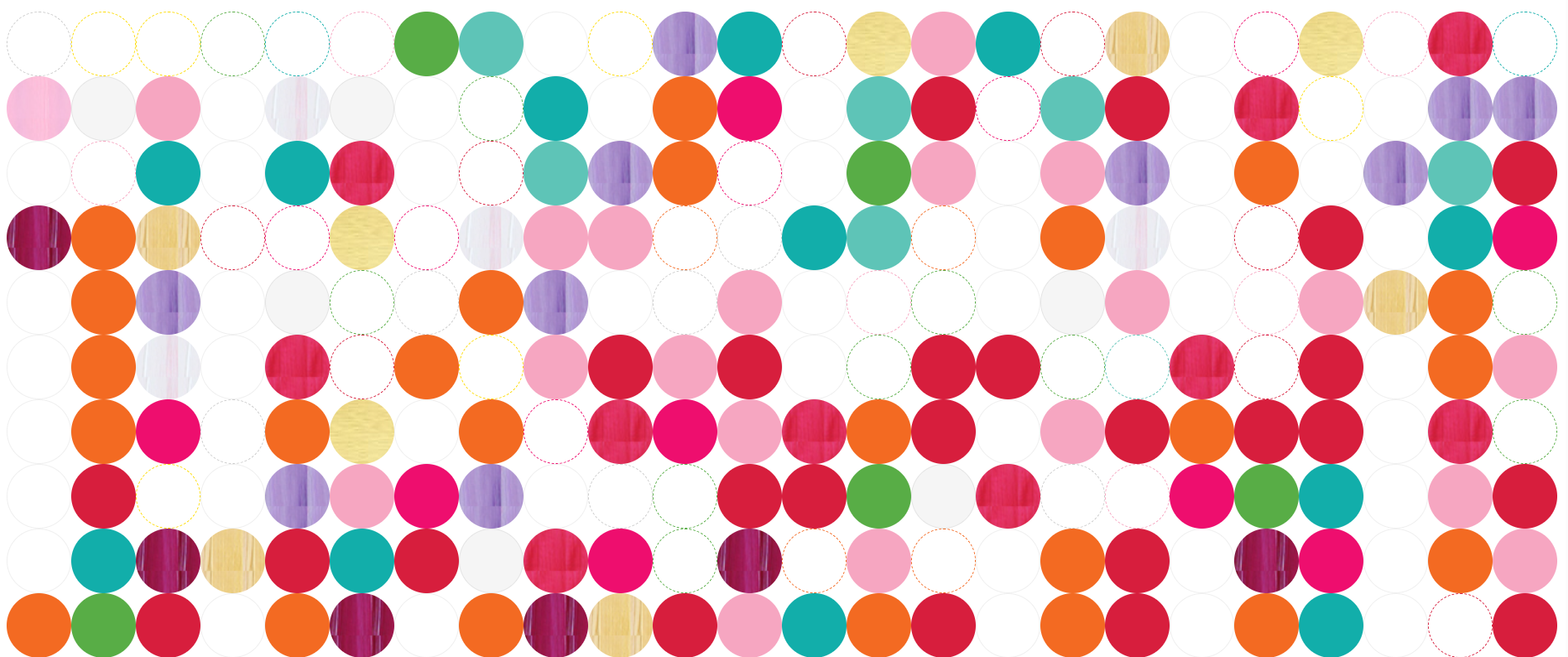
Consensus is an interactive art installation and live digital artwork built around shared authorship, real-time participation, and AI intervention. At first glance, it appears to be a grid of 1,000 circles on a screen. Look longer and the deeper idea emerges. No single person controls the image, no state is final, and the artwork is never complete. Consensus turns interactive art into a live conversation between human participants and artificial intelligence.
Anyone can participate. A person in the gallery, someone online, or a viewer connecting from anywhere in the world can click a circle and instantly change part of the composition. Each click triggers one of twenty-six possible visual treatments, including solid fills, textures, translucent layers, and outlined forms. The participant does not select the exact result. The system does. That balance between human action and system behavior is central to how Consensus works as a participatory art installation.
Because every action is synchronized in real time, every participant sees the same artwork evolving at the same moment. One click can shift the visual field for everyone. The piece becomes a shared surface of collective decision-making, chance, interruption, and transformation. It is interactive AI art not because AI makes the artwork alone, but because human interaction and machine interpretation shape it together.
What Is Consensus?
Consensus is a real-time interactive digital art installation where 1,000 clickable cells form a single shared composition. Every participant works on the same artwork at the same time. Instead of offering a private experience, the piece creates a global public canvas shaped by many people at once.
This makes Consensus more than a visual experience. It is also a system for exploring collective authorship, collaborative creativity, networked participation, and the role of AI in contemporary art. The artwork asks what happens when many strangers make small decisions inside the same visual field and then a machine interprets the whole thing as a single composition.
How This Interactive Art Installation Works
The technical structure of Consensus is essential to its meaning. Real-time synchronization through Socket.io ensures that the work exists as one live composition, not a series of isolated copies. If a participant changes a circle in one city, viewers in other locations see that change immediately. There is only one artwork, and everyone is affecting it together.
This creates a very different kind of interactive art experience. Most interactive works are centered on the individual viewer. Consensus is built around the opposite condition. Every click enters an already active field of decisions made by other people. Each contribution can be overwritten, absorbed, echoed, or disrupted by what follows. The artwork stays open, unstable, and permanently unfinished.
How Consensus Works
Any participant can click any of the 1,000 cells. The system then randomizes that cell through 26 possible visual styles, including fills, textures, transparency, and outlines.
Every change is broadcast instantly to all connected viewers. Everyone sees the same evolving artwork in real time, whether they are in the gallery or participating online.
When human activity slows, the AI analyzes the entire 1,000-cell artwork and generates a new full composition. It does not revise one area. It reconsiders the whole image at once.
AI as a Co-Author in Interactive Art
The most compelling part of Consensus is what happens when people stop interacting. The AI does not compete with participants in every moment. It waits. Once the artwork reaches a pause, the AI steps in, reads the entire composition, and returns a newly reorganized version of the whole visual field.
This makes the AI a true co-author. Human participants act locally, one click at a time. The AI acts globally, treating the artwork as a total composition. These are two very different forms of authorship. Neither is final. Neither fully dominates the other. The artwork lives in the tension between distributed human participation and machine-scale interpretation.
The crowd composes one cell at a time. The AI waits for stillness, then rewrites the entire image.
Consensus / Artist StatementThe AI in Consensus follows a written directive that defines aesthetic priorities such as contrast, balance, rhythm, tension, and surprise. That directive is authored by a human, but the AI’s response is not fully predictable. Each recomposition becomes a form of collaborative authorship between artist, participant, and machine.
Shared Authorship and Collective Creativity
The title Consensus invites interpretation. In politics or philosophy, consensus often suggests discussion, agreement, and shared intention. In this artwork, there is no debate, no vote, and no spoken coordination. People simply act. Yet a visual order still emerges from hundreds of independent decisions.
That is where the artwork becomes especially relevant to contemporary culture. Online systems, social platforms, algorithmic feeds, and AI tools increasingly shape meaning through countless small inputs rather than through a single authorial voice. Consensus turns that condition into a visible and participatory form. It shows what collective creativity can look like when it is immediate, public, and always vulnerable to change.
The AI complicates the idea of consensus even further. It does not represent what the crowd wants. It responds to what the crowd has produced. Its interventions function more like editorial judgment at scale. That shifts the artwork away from simple collaboration and into a new territory where authorship is distributed, unstable, and contested.
Consensus and the History of Participatory Art
Consensus belongs to the tradition of participatory art, interactive installation, and new media art. Like earlier works by artists who created systems for audience involvement, it establishes conditions and allows the artwork to be shaped by participation. But it also expands that tradition in important ways.
First, participation in Consensus is simultaneous and global. People do not encounter the work one after another. They inhabit it together in real time. Second, the artwork includes AI as an active interpretive force. The machine is not just a tool hidden behind the interface. It is part of the artistic logic of the work itself.
For that reason, Consensus stands at the intersection of interactive art, generative art, AI art, and networked installation. Its medium is not only visual form. Its medium is also connection, participation, timing, and machine recomposition.
What It Feels Like to Experience Consensus
In person, Consensus reads as a striking field of shifting form, texture, and tone. The grid can feel ordered one second and disrupted the next. Sometimes it settles into a composition that seems intentional and balanced. Moments later, a new click interrupts that harmony and restarts the negotiation. The artwork is alive because it never stops moving between order and instability.
Viewers often hesitate before interacting. They recognize that their action will affect what other people are seeing. That hesitation is part of the work. It asks whether an individual mark still matters when the image is being shaped by hundreds of strangers and periodically reinterpreted by AI. The answer remains open, and that openness is part of what gives the installation its energy.
Why Consensus Matters in Contemporary Art
Consensus matters because it reflects a larger cultural reality. Today, art, information, and public meaning are often shaped through systems that combine human participation with machine logic. This interactive AI art installation makes that condition visible. It transforms abstract questions about authorship, collaboration, and artificial intelligence into something people can see, touch, and influence.
Rather than using AI to replace the artist, Consensus uses AI inside the artwork itself. The machine does not generate the entire piece from nothing. It enters an active field of human decisions and responds to them. That is what makes Consensus a compelling model for interactive art in the age of AI.
Frequently Asked Questions
What is Consensus?
Consensus is an interactive art installation and participatory digital artwork built from a grid of 1,000 clickable cells. Each click changes the visual state of one cell, and every participant sees the same shared composition in real time.
How does the AI work in Consensus?
The AI waits for a pause in human activity, analyzes the entire 1,000-cell composition, and then generates a new arrangement for the whole artwork. It acts as a co-author by responding to the full visual field rather than to individual clicks.
Is Consensus an example of interactive AI art?
Yes. Consensus is interactive AI art because human participants and artificial intelligence both shape the artwork. People create local changes through clicks, while the AI periodically reorganizes the full composition.
Can people participate in Consensus online?
Yes. Consensus can be experienced both in person and online. Because the artwork uses real-time network synchronization, anyone with access to the interface can affect the same shared composition.
What technology does Consensus use?
Consensus uses Socket.io for real-time synchronization and an AI model guided by an aesthetic directive to periodically recompute the full composition. The visual system includes twenty-six distinct appearance states for each clickable cell.
Why is Consensus important in contemporary art?
Consensus explores shared authorship, collective creativity, participatory art, and the role of AI in contemporary culture. It offers a live example of how humans and machines can co-create a single artwork in real time.